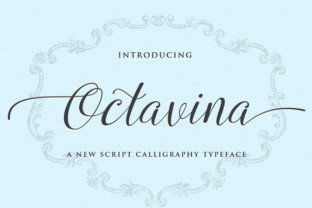
Octavina: The Handwritten Script Font That Redefines Creative Typography
Typography is the silent storyteller of design. Whether you are crafting a wedding invitation, building a brand identity, or designing a social media post, the font you choose speaks volumes before a single word is read. Among the vast sea of typefaces, handwritten script fonts hold a special place—they bring warmth, personality, and a human touch to digital and print media. One such font that has been quietly capturing the attention of designers, hobbyists, and business owners alike is Octavina. But Octavina is not just any handwritten script font. It is a beautifully crafted typeface that comes packed with loads of alternates, cleverly split across different font files to make your design workflow smoother than ever. In this article, we will explore everything you need to know about Octavina—from what makes it special to how you can use it effectively in your projects.
What Exactly Is Octavina?
At its core, Octavina is a stunning handwritten script font that mimics the fluid, natural strokes of hand lettering. Unlike rigid, geometric typefaces, Octavina carries the imperfections and charm of real handwriting—slight variations in stroke weight, graceful curves, and a rhythm that feels organic. It is the kind of font that makes a headline feel personal and a logo feel crafted by hand.
But what truly sets Octavina apart from other script fonts is its extensive library of alternates. In typography, alternates are alternative glyph shapes for letters, allowing you to customize the look of your text. For example, instead of every "a" looking identical, you can choose from several different versions of the letter "a" to create a more natural, varied appearance. Octavina takes this concept and runs with it, offering a wealth of alternates that give you remarkable control over the final aesthetic of your typography.
The Magic of Handwritten Script Fonts in Modern Design
Before diving deeper into Octavina's features, it is worth understanding why handwritten script fonts matter in the first place. In an increasingly digital and automated world, people crave authenticity. A handwritten font can make a brand feel approachable, a product feel artisanal, or a message feel heartfelt. This is why script fonts are so popular for:
- Wedding and event stationery – Invitations, place cards, and thank-you notes benefit from the romantic, personal feel of script.
- Branding and logos – Small businesses, especially those in creative fields like bakeries, florists, or boutique shops, use script fonts to convey craftsmanship and care.
- Social media graphics – A beautiful script can make a quote or announcement stand out in a crowded feed.
- Packaging design – Products that want to evoke a handmade or premium quality often turn to script typography.
- Blog headers and titles – Adding a touch of elegance to your website's headings can set the tone for your entire brand.
Octavina fits perfectly into all these use cases because it offers the beauty of hand lettering without sacrificing usability. And thanks to its cleverly organized alternates, you do not need to be a typography expert to achieve professional results.
Understanding Font Alternates: A Beginner's Guide
If you are new to typography, the concept of alternates might sound technical, but it is actually quite simple and exciting. Most standard fonts include only one version of each letter. That means every "e," "s," or "t" looks exactly the same every time it appears. In a script font, this can look repetitive and unnatural—real handwriting never repeats itself perfectly.
Alternates solve this problem by providing multiple versions of specific letters. For example, you might have three different variations of the lowercase "r," each with a different curve or tail length. By mixing and matching these alternates, you can create text that looks truly handwritten, with natural variation and flow.
Octavina takes this idea and amplifies it. The font comes packed with loads of alternates, giving you an impressive range of choices for almost every character. But here is where Octavina does something particularly clever: these alternates are split into different font files. This makes the font super easy to use because you can simply switch between font files in your design software to access different sets of alternates, rather than digging through complex OpenType features or character maps.
How Octavina Organizes Its Alternates Across Font Files
One of the most common frustrations designers face with alternate-rich fonts is the learning curve. Many script fonts require you to use OpenType features in programs like Adobe Illustrator or InDesign, which can be intimidating for beginners. You might need to remember specific ligatures, stylistic sets, or contextual alternates—and even then, the results can be unpredictable.
Octavina removes this friction entirely. Instead of cramming all alternates into a single font file with complicated activation methods, the font is divided into multiple font files, each containing a distinct set of alternates. This means you can:
- Install several versions of Octavina on your computer, each labeled clearly (e.g., Octavina Regular, Octavina Alternate 1, Octavina Alternate 2, etc.).
- Select the font file that contains the look you want directly from your font menu in any software—Word, Canva, Photoshop, or even a simple text editor.
- Mix and match by applying different font files to different words or letters within the same project, giving you incredible flexibility without any technical hassle.
This approach is a game-changer for both beginners and experienced designers. Beginners can instantly access beautiful variations without learning OpenType features. Professionals can speed up their workflow and experiment more freely. It is a thoughtful design choice that reflects a deep understanding of how people actually use fonts.
Practical Examples of Using Octavina in Real Projects
Let us walk through a few concrete scenarios to show you how Octavina's alternates can elevate your work.
Example 1: Wedding Invitation Suite
Imagine you are designing a wedding invitation. You want the names of the couple to be elegant and romantic, with a flowing, handwritten feel. Using Octavina's standard font file gives you a beautiful baseline. But for the couple's names, you might switch to an alternate file that features more ornate capital letters with longer swashes. Meanwhile, for the body text—like the date and venue—you use a different alternate file that offers simpler, more legible lowercase letters. The result is a cohesive but varied design that feels rich and artisanal.
Example 2: Brand Logo for a Bakery
For a bakery logo, you want warmth and charm. Octavina's standard lowercase letters might be perfect for the main wordmark. But for the initial letter, you could use an alternate file that includes a decorative capital "B" with a flourishes. The alternates allow you to create a unique logo that does not look like a generic template—something that is crucial for brand identity.
Example 3: Social Media Quote Graphic
When creating a quote graphic for Instagram, you often want the text to feel hand-lettered. With Octavina, you can write out the quote and then experiment with different font files for specific words to add emphasis or visual interest. The key word might be set in a more elaborate alternate, while the rest stays clean and readable. This dynamic contrast grabs attention without overwhelming the viewer.
Why Octavina Fits Perfectly into Modern Creative Workflows
In today's fast-paced design environment, efficiency matters. Whether you are a freelance graphic designer, a small business owner managing your own marketing, or a hobbyist exploring creative projects, you need tools that work intuitively. Octavina's split-font design aligns perfectly with modern workflows because it reduces friction and increases experimentation.
Moreover, Octavina's handwritten aesthetic resonates with the current cultural shift toward authenticity. Consumers are increasingly drawn to brands that feel human, personal, and imperfect in a beautiful way. Using a font like Octavina signals that you care about detail and craftsmanship. It tells your audience that you have taken the time to make something special—and that is a powerful message in any market.
Common Misunderstandings About Script Fonts and Alternates
Let us clear up a few misconceptions that people sometimes have about fonts like Octavina.
- "More alternates mean the font is harder to use." This is generally true with traditional fonts, but Octavina's split-file approach turns this on its head. More alternates actually become easier to use because they are organized logically across separate files.
- "Script fonts are only for formal occasions." While Octavina is certainly elegant enough for weddings and formal events, its versatility means it can also work for casual branding, product labels, or digital content. The alternates allow you to dial the formality up or down.
- "I need expensive software to use alternates." Not with Octavina. Because the alternates are in separate font files, you can use them in any program that lets you choose a font—including free tools like Canva, Google Docs, or even basic image editors.
- "Handwritten fonts are not professional." This depends entirely on execution. A well-crafted script font like Octavina, used appropriately, can convey professionalism through its attention to detail and quality. Many top brands use script typography to differentiate themselves.
Getting Started with Octavina: Tips for Beginners
If you are excited to try Octavina for yourself, here are a few practical tips to get the most out of it.
- Install all the font files. When you purchase or download Octavina, make sure to install every included font file on your system. Each one offers a different set of alternates, and you will want them all at your fingertips.
- Experiment by layering. Try writing the same word in different Octavina font files and compare them. Notice how the mood changes with each variation. This will help you develop an intuitive sense of which alternate to use and when.
- Pair it with a simple sans-serif. Script fonts work beautifully when paired with a clean, neutral sans-serif for body text or secondary information. This contrast makes the script stand out even more.
- Do not overdo it. While the alternates are tempting, avoid using too many different versions in a single block of text. The goal is natural variation, not chaos. Trust your eye—if it looks balanced and pleasing, it is probably right.
- Use it for emphasis. Even if you only use Octavina for a single word or letter in a design, it can serve as a powerful accent that draws the viewer's eye.
The Broader Significance of Thoughtful Font Design
Octavina is more than just a pretty typeface. It represents a shift in how font designers think about usability and accessibility. By splitting alternates across multiple font files, the creator of Octavina has made advanced typography accessible to everyone—not just those who know how to navigate OpenType panels. This democratization of design tools is incredibly important. It empowers small business owners, students, and non-designers to create professional-looking work without a steep learning curve.
In a world where visual communication is more important than ever, having the right font can make all the difference. Octavina gives you not just a font, but a system for creative expression. It invites you to explore, to play, and to find your own voice through typography.
Final Thoughts: Is Octavina Right for Your Next Project?
If you are looking for a handwritten script font that combines beauty with practicality, Octavina is an excellent choice. Its stunning letterforms, generous collection of alternates, and user-friendly organization make it a standout option for any project that needs a personal, elegant touch. Whether you are designing a wedding invitation, building a brand from scratch, or simply adding flair to your social media presence, Octavina gives you the tools to create something memorable.
Typography is an art, but it should also be a pleasure. Octavina makes that pleasure accessible to everyone. So go ahead—download it, install it, and start experimenting. You might be surprised at how much personality a single font can bring to your work.